


WITH OUR CERAMICS PROCESSING VIDEO, YOU GO FURTHER!
INSTALLATION AND MAINTENANCE OF CERAMICS
Once you have chosen the right product, it must be installed carefully and neatly to achieve a durable and beautiful paving surface. To simplify this, we have installation instructions available as video and text. Please take the following installation instructions into account.
PROCESSING PRODUCTS

REDSUN GROUT MORTAR
Learn more 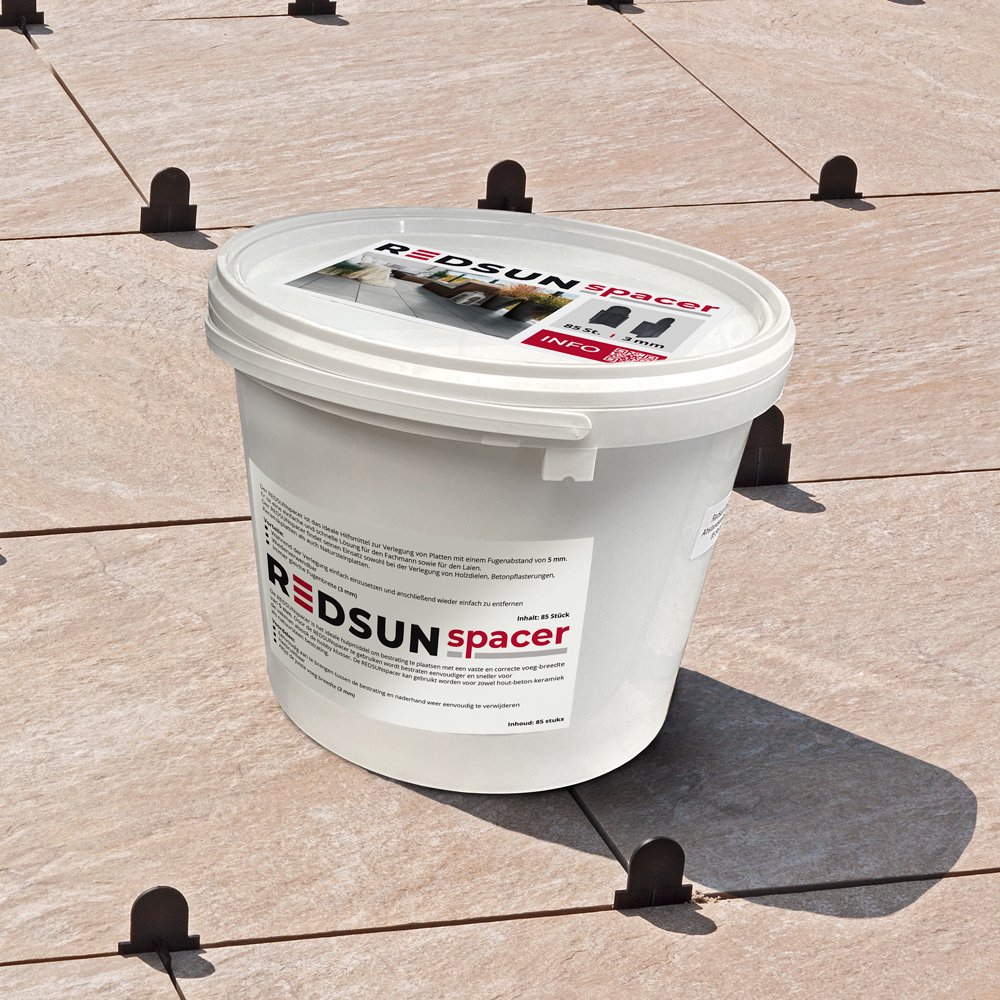
REDSUN SPACERS
Learn more 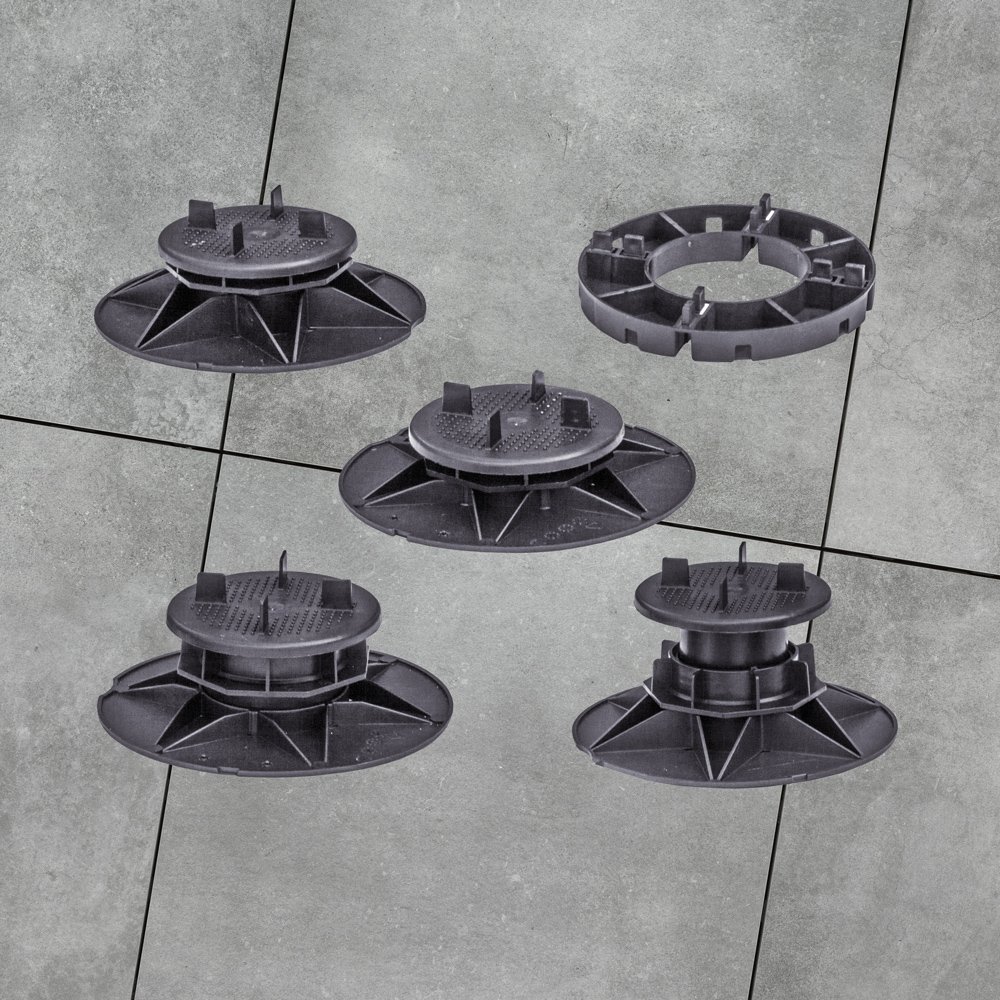
TILE SUPPORTS
Learn more 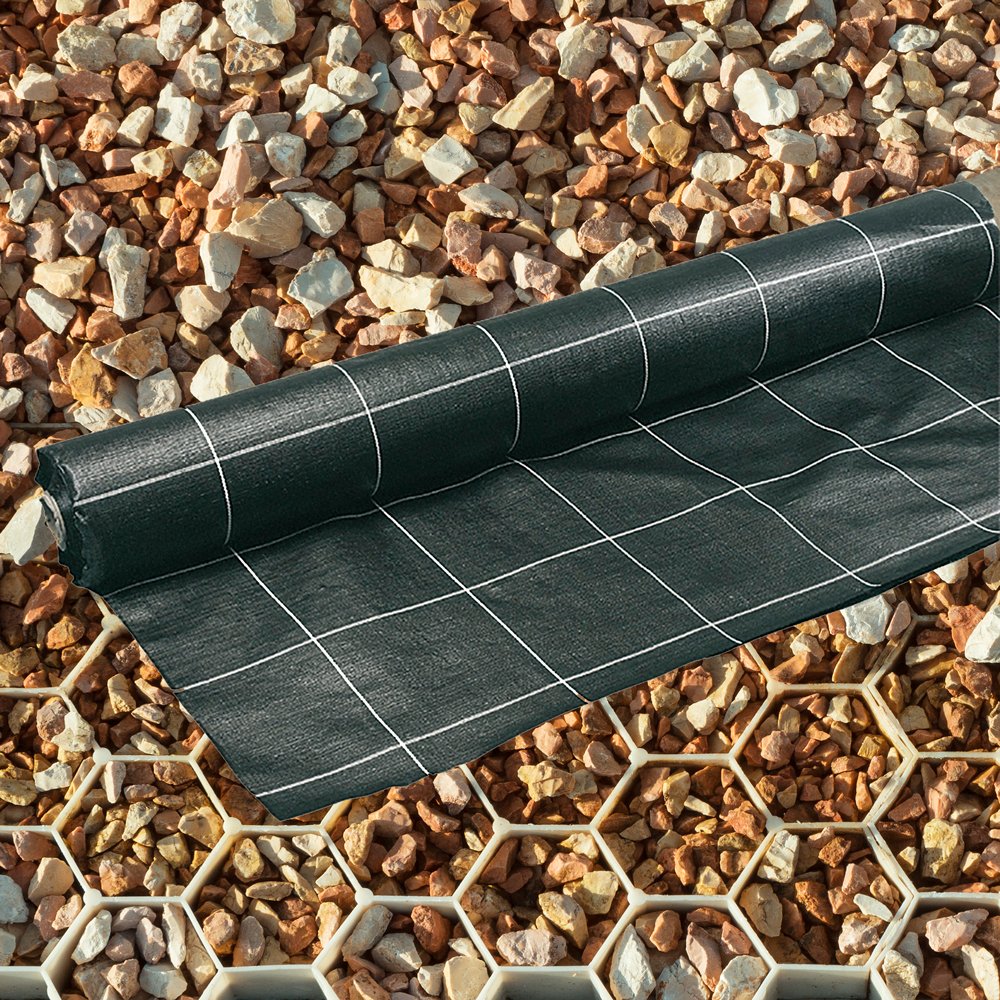
GRAVEL & SPLIT SUPPLIES
Learn more PROCESSING OF CERAMICS IN THREE POSSIBILITIES
BONDED BEDDING ON AN UNBONDED SUPPORT LAYER
- BEFORE INSTALLATION
Before laying the tiles, check the material for type, quantity, and quality. Any defects in the material must be reported in writing before the paving is laid.
- PREPARING OF THE SUBSTRATE
Excavate non-load-bearing soil layers until you reach a stable subsoil. The subsoil must be at least 35 cm below the paving and have a slope of at least 1.5% for good water drainage. Compact the subsoil with a suitable vibratory plate before applying the load-bearing and frost-protective layer.
- BEARING AND FROST PROTECTION LAYER
Apply a bearing and frost protection layer and compact it in layers with gravel or chippings (0-45 mm). Ensure there is also a slope of at least 1.5%. Place edge restraints (e.g., retaining bands) at the correct height and on a concrete foundation to prevent the stones from shifting. Try to work as much as possible
according to the grid size (stone size + joints) to avoid cutting.
- THE BEDDING
The bedding consists of a 6 cm thick layer of uncompacted mono-grain mortar. Use tools such as a screed and two leveling boards to finish the bed level with a slope.
- PROCESSING
After the bed has been applied, you must not walk on it. Lay the tiles onto the paved surface from the top down, working row by row. To achieve strong adhesion, the underside of the tiles must be coated with a suitable bonding mortar. Next, the tiles are placed in the bedding that has not yet hardened. For a homogeneous color distribution, the tiles from multiple packages and layers must be mixed during installation. Due to production requirements, a stretcher bond is not recommended for ceramic tiles; instead, a cross bond, third bond, or quarter bond is used. In the third and quarter bonds, the tiles of the next row are placed staggered by a third or a quarter of the previous row, as the name suggests. Ensure the tiles are fully supported to prevent them from tilting later. Use a rubber mallet and a piece of wood to bring the tiles to the correct height. The tiles must not be vibrated! Maintain a joint width of approximately 4 mm to 2 mm. Use REDSUN Spacers for an even joint appearance. Use a guideline to ensure everything is laid straight. With the bonded construction method, expansion joints towards the building or depending on the size of the surface must be taken into account.
Ceramic tiles can be grouted with suitable one- or multi-component grout. The manufacturer’s processing instructions must be strictly followed, including those regarding the substrate and the joint finish. An expansion joint must also be installed at connections to structural elements or walls.
BONDED BEDDING ON AN EXISTING CONCRETE FLOOR SLAB
- BEFORE INSTALLATION
Before laying the tiles, check the material for type, quantity, and quality. Any defects in the material must be reported in writing before the paving is laid.
- LOAD-BEARING AND FROST-PROTECTING LAYER
When installing on a concrete floor slab, a slope of at least 1.5% must be guaranteed. If necessary, a sloping floor must be installed beforehand. The existing subfloors or house connections must be sealed with suitable materials. For better drainage, we recommend the installation of a drainage mat. Place edging restraints (e.g., curb stones) at the correct height and on a concrete foundation to prevent the stones from shifting. Try to work as much as possible according to the grid size (brick size + joints) to avoid cutting.
- BEDDING AND COMPENSATION LAYER
- PROCESSING
- GROOVING
The drainage mats must be installed according to the manufacturer’s instructions. The bed is made of a 6 cm thick, non-compacted monogranule mortar and is leveled using a screed and two leveling boards. Mix only as much material as can be processed within the working time.
After the bed has been laid, do not walk on it. Lay the tiles on the paved surface from above and work row by row. To achieve strong adhesion, the underside of the tiles must be provided with a suitable bonding mortar. Subsequently, the tiles are placed in the bedding that has not yet hardened. For a homogeneous color distribution, the tiles from multiple packages and layers must be mixed during processing. Due to production requirements, a stretcher bond is not recommended for ceramic tiles; instead, a cross bond, third bond, or quarter bond is used. In the third and quarter bonds, as the name suggests, the tiles of the next row are staggered by a third or a quarter of the previous row. Ensure full support for the tiles to prevent them from tilting later. Use a rubber mallet and a piece of wood to raise the tiles to the correct height. The tiles must not be vibrated! Maintain a joint width of approximately 4 mm to 2 mm. Use REDSUN Spacers for an even joint appearance. Use a guideline to ensure everything is laid straight. With the bonded construction method, expansion joints towards the building or depending on the size of the surface must be taken into account.
Ceramic tiles can be grouted using suitable one- or multi-component grout. The manufacturer’s installation instructions must be strictly followed, including those regarding the substrate and joint finishing. Expansion joints must be installed and executed in accordance with the ZDB data sheet and the instructions from the manufacturer of the drainage mats. At connections to structural elements or walls, a movement joint must also be installed.
TILE SUPPORTS ON A CONCRETE SLAB
- BEFORE INSTALLATION
Before laying the tiles, check the material for type, quantity, and quality. Any defects in the material must be reported in writing before the paving is laid.
- LOAD-BEARING AND FROST-PROTECTING LAYER
When installing on a concrete floor slab, a slope of at least 2.5% must be guaranteed. If necessary, a sloping floor must be installed beforehand. Existing sub-bases or house connections must be sealed with suitable materials. For better drainage, we recommend the installation of a drainage mat. Place edge restraints (e.g., edging strips) at the correct height and on a concrete foundation to prevent the stones from shifting. Try to work as much as possible according to the grid size (stone size + joints) to avoid cutting.
- INSTALLATION
The ceramic tiles are laid flat on the tile supports. The joint spacing is determined by the tile supports. Depending on the size of the tiles, tile supports must be placed at the corners or support points of the tile. Due to production, a stretcher bond is not recommended for ceramic tiles; instead, a cross bond, third bond, or quarter bond is used. In the third and quarter bonds, the tiles of the next row are placed staggered by a third or a quarter of the previous row, as the name suggests. It is advisable to use a reference cord to ensure straight alignment. An expansion joint must also be installed at connections to building elements or walls.
CLEANING & MAINTENANCE
Ceramic tiles are a popular choice for patios because they are low-maintenance and offer a variety of designs and colors.
To ensure your ceramic tiles remain beautiful for a long time, it is important to maintain and clean them properly. Wipe the surface clean regularly to remove coarse dirt. Cleaning with a high-pressure washer should be avoided, as the high pressure can damage the grout.
For stubborn stains, a brush or sponge can be used. Stains such as red wine, mustard, or grease can be removed relatively easily with water. If necessary, special cleaning agents for ceramic tiles can be used. Consult a trusted professional for advice on this.
To avoid affecting the anti-slip properties, we advise against impregnating the tiles. Due to their structure, ceramic tiles are already optimally protected against the elements, so no additional impregnation is necessary.